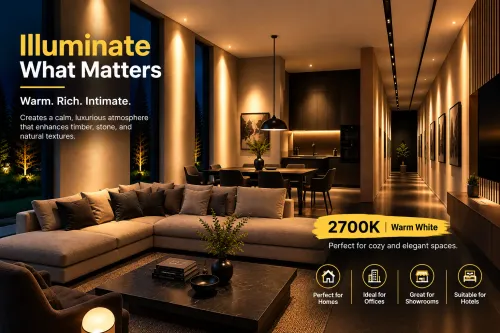
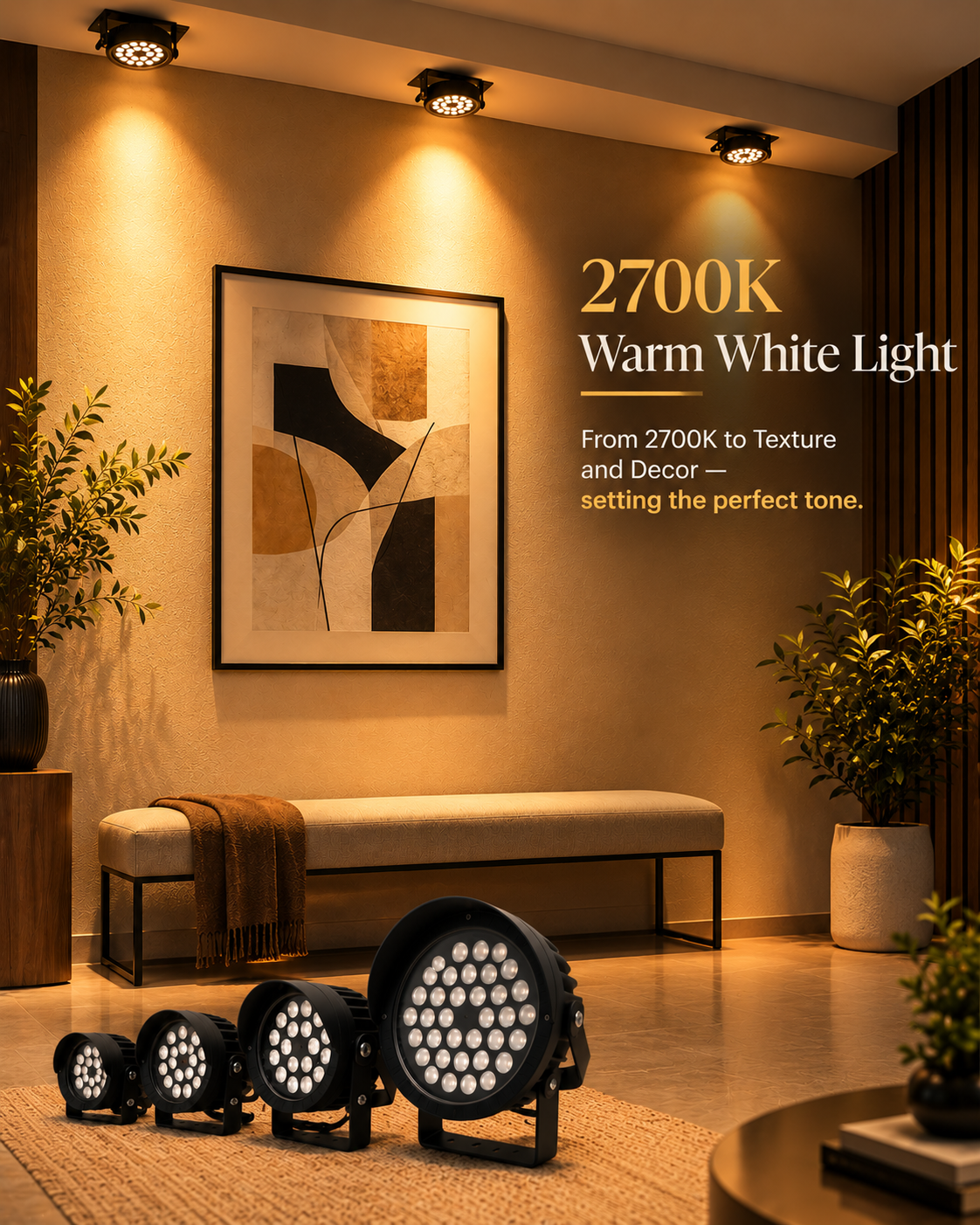
Lighting design is not simply about making a room brighter. The quality, colour temperature, direction and distribution of light determine how we perceive the architecture, materials and atmosphere of a space. Among warm lighting options, 2700K Warm White is particularly effective for creating intimate, sophisticated and residential-style environments.
Understanding 2700K: What Does Kelvin Actually Mean?
2700K refers to the correlated colour temperature (CCT) of the light source. Lower Kelvin values produce warmer, more yellow/amber light, while higher values appear progressively whiter and cooler.
2700K – warm, golden and intimate
3000K – warm white with slightly cleaner appearance
4000K – neutral white
5000K+ – cool/daylight appearance
The important point is that 2700K does not mean the light is less powerful. Kelvin describes the colour appearance of the light, while lumens describe how much visible light it produces.
Why 2700K Looks Different on Every Material
One of the most interesting aspects of warm lighting is its interaction with surface materials.
A 2700K light source can visually enrich:
Wood: brings out warmer brown and honey tones
Stone: creates depth and softer shadows
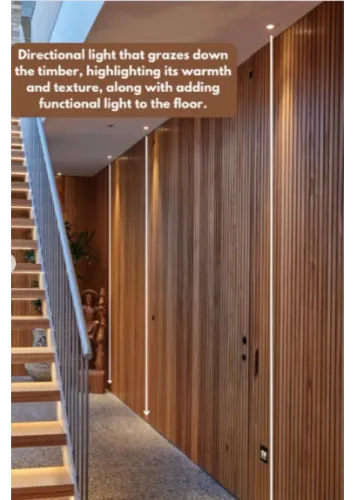
Textured walls: reveals surface variation through grazing light
Fabric: produces a softer, more comfortable appearance
Artwork: can create a dramatic focal point when properly positioned
This is why lighting should be considered alongside the interior material palette, rather than selected as an isolated electrical product.
The Role of Beam Angle
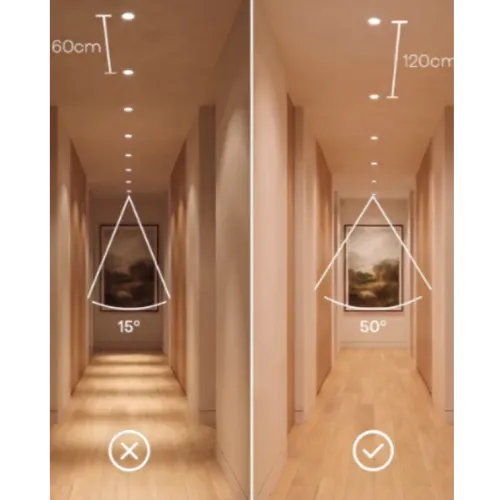
Colour temperature is only one part of the lighting equation. Beam angle controls where the light goes.
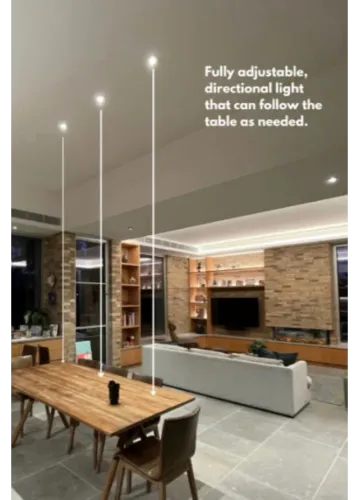
A narrow beam produces a concentrated pool of light, making it useful for artwork, sculptures and specific architectural details. A wider beam distributes illumination across a larger surface.
For example:
15°–24° → Focused accent lighting
Ideal for artwork, décor and selected architectural elements.
36° → Balanced accent lighting
Useful when you want a feature to stand out without an extremely concentrated beam.
60° → Wider illumination
Suitable for broader walls and larger interior areas.
The same 2700K colour temperature can therefore produce completely different visual results depending on the beam angle and mounting position.
Wall Washing vs Wall Grazing
This distinction is important in professional lighting design.
Wall Washing
The light is distributed relatively evenly across the wall, creating a smooth and bright vertical surface.
Wall Grazing
The fixture is positioned closer to the wall so that light travels across the surface. This produces stronger highlights and shadows, making textures much more visible.
For stone, brick, textured plaster and decorative wall finishes, grazing can create considerably more visual depth than simply increasing the brightness.
ML Saini Electric Company – Lighting Beyond Illumination
At ML Saini Electric Company, lighting is approached as an important part of the complete electrical and interior solution. As a dealer, supplier, wholesaler and retailer in Delhi NCR, the company caters to homeowners, builders, architects, interior designers, contractors and commercial projects.
The right lighting product is not simply the one with the highest wattage. It should be selected according to the space, surface, mounting height, beam angle, colour temperature, visual objective and required light level.
Keywords