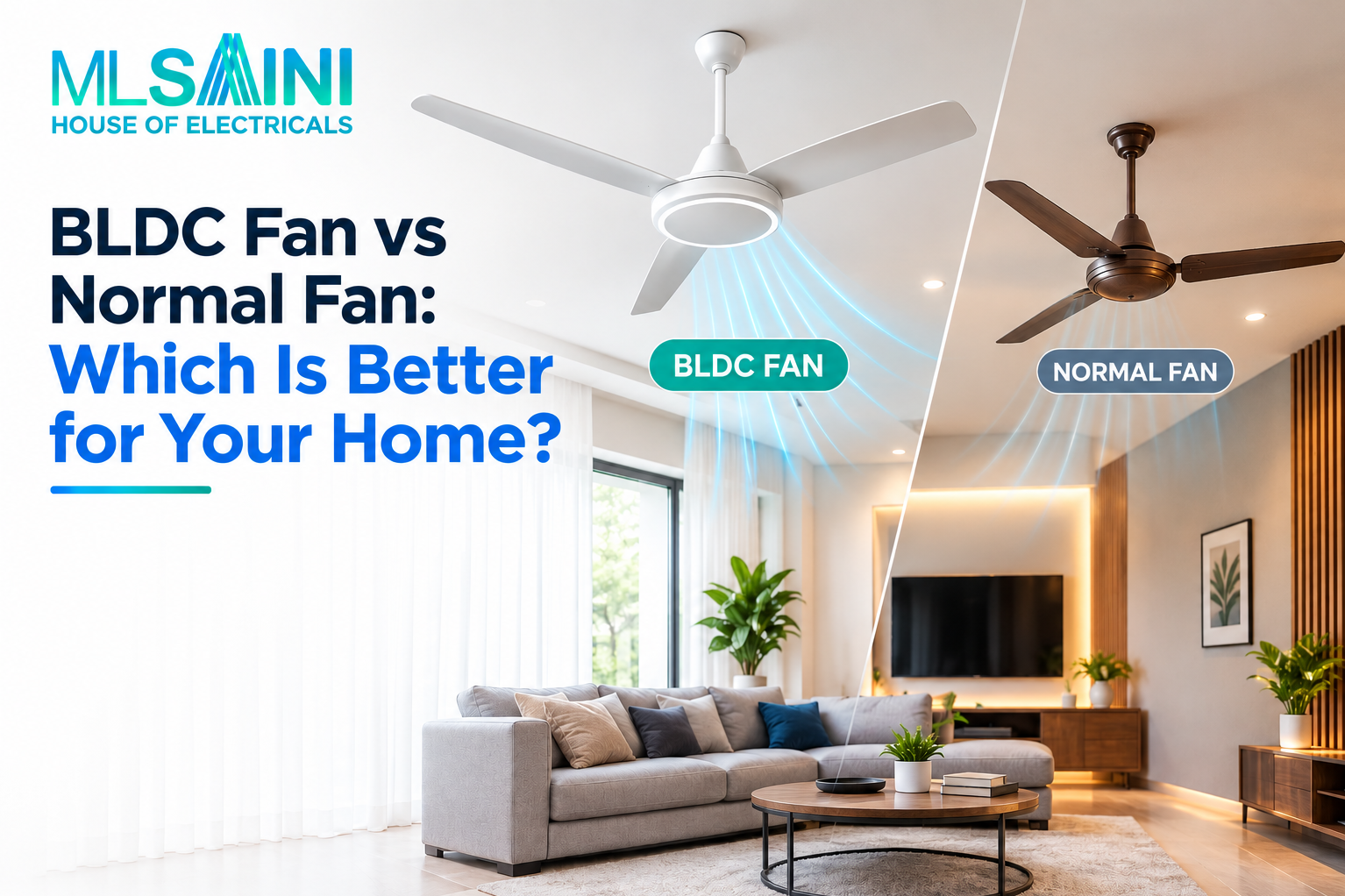
Choosing the right ceiling fan can make a difference to your home's comfort and electricity consumption. With several types of ceiling fans available, many homeowners wonder whether a BLDC fan or a normal ceiling fan is the better choice.
Both types circulate air and help improve comfort, but they differ in motor technology, energy consumption, controls, and initial cost. Understanding these differences can help you choose a fan that suits your room, budget, and daily usage.
At ML Saini Electric Company, we understand the importance of selecting suitable electrical products for residential and commercial spaces. This guide compares BLDC fans and normal fans to help you make an informed buying decision.
What Is a BLDC Fan?
A BLDC fan uses a Brushless Direct Current (BLDC) motor. Electronic circuitry controls the motor, allowing it to operate without the traditional brushes used in brushed motors.
Many residential BLDC ceiling fans are designed to consume less electricity than comparable conventional induction-motor fans while delivering suitable airflow. However, actual performance depends on the specific model, speed setting, and operating conditions.
Some BLDC fans also offer features such as remote controls, timer settings, sleep modes, or multiple speed options. Available features vary by model.
What Is a Normal Ceiling Fan?
A conventional ceiling fan commonly uses an induction motor to rotate its blades and circulate air throughout the room.
Normal ceiling fans are available in a wide range of designs, sizes, speeds, and price points. Many models use a regulator to control fan speed, although the type of regulator must be compatible with the fan.
Conventional fans remain a practical option for homeowners who want straightforward operation and a lower initial purchase cost.
BLDC Fan vs Normal Fan: Key Differences
Understanding the main differences between these two fan types can help you select the right option for your home.
Energy Consumption
One of the main reasons people consider BLDC fans is their potential to reduce electricity consumption.
BLDC fans generally use less power than many conventional fans with comparable airflow. The exact difference depends on the models being compared, their wattage, and the speed at which they operate.
Before buying, check the rated power consumption and airflow specifications rather than relying only on general savings claims.
Initial Purchase Cost
Conventional ceiling fans are often available at lower initial prices, making them attractive when the purchase budget is limited.
BLDC fans may cost more upfront because of their motor technology and electronic controls. The additional cost may be worthwhile for households that use their fans for several hours each day.
Compare the actual purchase prices and expected running costs before deciding.
Remote Control and Smart Features
Many BLDC fan models include remote controls, timers, or other convenience features.
These functions can make everyday operation easier, especially in bedrooms and living rooms. However, not every BLDC fan includes all these features.
Conventional fans may use a wall switch and compatible regulator for speed control. Some models also offer remote-control options, so compare the features of individual products.
Noise and Comfort
Fan noise depends on several factors, including motor design, blade balance, installation quality, mounting, and operating speed.
Some BLDC fans are designed for quiet operation, but it is important to check model-specific specifications and reviews rather than assuming every BLDC fan is quieter than every conventional fan.
Proper installation and maintenance also help support comfortable operation.
Power Backup Compatibility
Some BLDC fans can operate with suitable backup systems, but compatibility depends on the fan's electrical design and the inverter or backup system being used.
Do not assume that every BLDC fan will work with every inverter. Check the manufacturer's instructions and compatibility requirements before purchasing.
How Much Electricity Can a BLDC Fan Save?
The potential electricity savings depend on the power consumption of the two fans, daily usage, and the electricity tariff.
For example, consider two hypothetical fans:
Conventional fan: 75 watts
BLDC fan: 30 watts
Daily usage: 10 hours
Usage period: 30 days
The estimated monthly consumption would be:
Conventional fan
75 W × 10 hours × 30 days ÷ 1,000 = 22.5 kWh
BLDC fan
30 W × 10 hours × 30 days ÷ 1,000 = 9 kWh
Estimated difference: 13.5 kWh per month per fan.
At an illustrative electricity rate of ₹8 per kWh, that difference would equal ₹108 per month.
These are example calculations, not guaranteed savings or specifications for every fan. Use the actual rated wattage of the models you are considering and your electricity tariff to estimate your potential savings.
Which Fan Is Better for Different Rooms?
The right fan depends on room size, ceiling height, airflow requirements, usage hours, and personal preferences.
Bedrooms: A fan with suitable airflow, convenient speed control, and an acceptable noise level can improve everyday comfort.
Living rooms: Consider the room dimensions, furniture layout, ceiling height, and the fan's airflow performance.
Kitchens: Heat, ventilation, and installation clearance are important when choosing a fan for this space.
Study rooms and home offices: A fan with convenient controls and appropriate airflow can help maintain comfort during working hours.
Always follow the manufacturer's guidance for fan size, mounting height, clearances, and installation.
How to Choose the Right Ceiling Fan
Before purchasing a BLDC or conventional fan, consider these factors:
Room size: Select a fan size suitable for the room's dimensions.
Airflow: Compare the airflow specifications of the available models.
Power consumption: Check the rated wattage and energy-efficiency information.
Speed control: Decide whether you prefer a wall regulator, remote, or other control options.
Noise: Review model-specific information if quiet operation is important.
Budget: Compare the initial price with expected running costs.
Warranty and service: Review the manufacturer's warranty terms and available service support.
Installation: Ensure that the ceiling support, wiring, and mounting arrangements are suitable.
ML Saini Electric Company offers electrical product solutions for residential and commercial requirements. Whether you are furnishing a new home, upgrading your existing ceiling fans, or sourcing electrical products for a project, comparing the available options can help you make a suitable choice.
Contact ML Saini Electric Company to enquire about ceiling fans and other electrical products, subject to availability.
Keywords