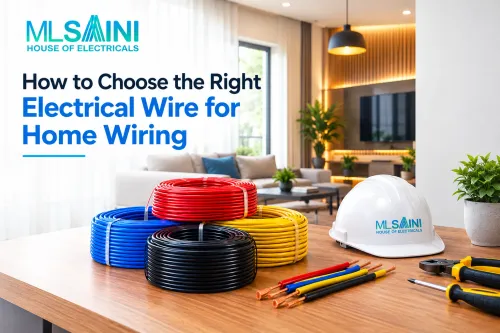
Why Choose the Right Electrical Products for Your Project
Electrical wiring is usually concealed inside walls, ceilings or conduits, so replacing it later can be disruptive and expensive. Making informed decisions before installation helps avoid preventable mistakes.
Homeowners, builders, contractors and electricians should consider the complete electrical system, including wires and cables, switches, circuit protection, accessories, earthing and installation quality.
ML Saini Electric Company supports customers exploring electrical and lighting solutions for residential and commercial requirements. Before purchasing, discuss your project requirements and verify the product specifications, availability and suitability for the intended application.
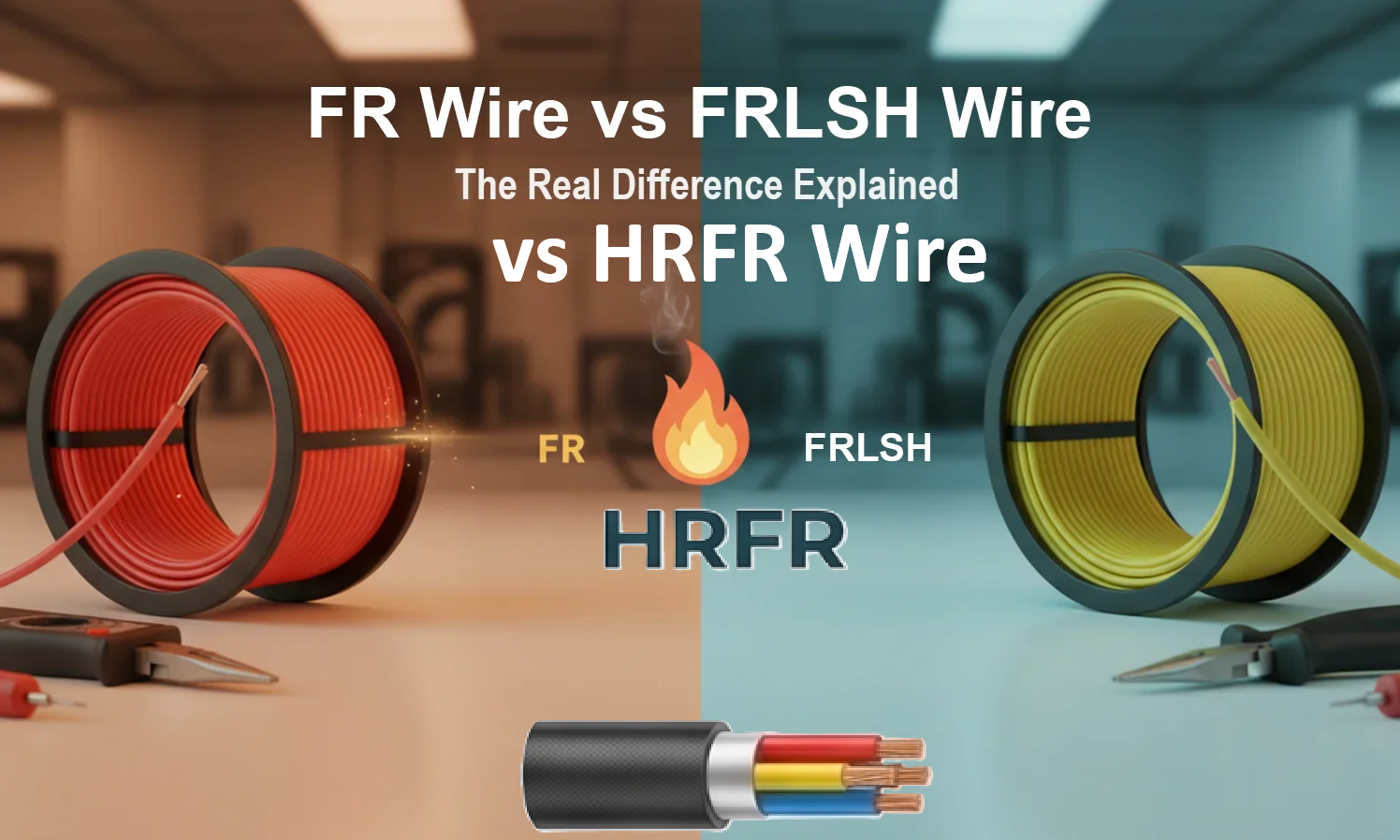
FRLS vs HRFR House Wire
Fire and Flame Performance
FRLS wire is intended to provide flame-retardant performance along with reduced smoke under specified conditions. This can be useful in occupied indoor spaces where smoke management is an important consideration.
HRFR wire also indicates heat-resistant and flame-retardant characteristics, subject to the product's actual specification. Its name alone does not tell you whether it offers the same low-smoke or low-halogen properties as a particular FRLS product.
Buying tip: Compare the documented test results and classifications rather than choosing by the abbreviation alone.
Heat Resistance
Heat resistance matters because electrical conductors generate heat when current flows. The amount of heat depends on current, conductor resistance, installation conditions and other factors.
A product with a higher specified temperature rating may be suitable for particular applications, provided the complete circuit design and installation comply with the relevant requirements.
Do not select a wire for an air conditioner, geyser, microwave or other high-power appliance solely because it is labelled HRFR. The conductor size, current-carrying capacity, protective device and manufacturer's instructions must all be considered.
Common Mistakes to Avoid When Buying Electrical Wire
Choosing only by price: A lower purchase price does not necessarily mean better value. Compare specifications, suitability and product authenticity before making a decision.
Confusing heat resistance with low-smoke performance: These are separate properties. Verify both when they matter to your project.
Using one wire size for every circuit: Different circuits have different electrical requirements. Lighting circuits and high-power appliance circuits should be assessed individually.
Ignoring the protective devices: Wire selection must work with the circuit breaker or other appropriate protective device. A suitable wire cannot compensate for incorrect protection.
Assuming flame-retardant means fireproof: Flame-retardant performance does not make wiring immune to fire, short circuits or overheating.
Ignoring the manufacturer's instructions: Installation conditions and permitted applications can differ between products. Always review the relevant technical documentation.
Frequently Asked Questions
What is the main difference between FRLS and HRFR house wire?
FRLS generally refers to flame-retardant, low-smoke wire. HRFR generally refers to heat-resistant, flame-retardant wire. The main distinction is the stated performance focus, but the exact properties must be confirmed from the manufacturer's documentation.
Is FRLS wire better than HRFR wire?
Neither is universally better. FRLS may be appropriate when documented low-smoke performance is a priority, while HRFR may be appropriate when a particular heat-resistance rating is required. The correct selection depends on the product specification and installation.
Can HRFR wire be used for a geyser or air conditioner?
It may be suitable if its electrical and temperature ratings meet the circuit's requirements. However, the HRFR label alone is not enough to confirm suitability. A qualified electrician should assess the load, wire size, protective device and installation conditions.
Does FRLS wire prevent electrical fires?
No. FRLS wire is designed to provide specified flame-retardant and low-smoke performance. It cannot prevent every electrical fire. Correct wire sizing, sound connections, suitable circuit protection, proper earthing and professional installation remain essential.
What should I check on a house-wire package?
Check the brand, conductor material, conductor size, voltage rating, temperature rating, insulation classification, applicable standard, certification details and manufacturer information. Confirm that the product is genuine and suitable for the intended application
Is a thicker electrical wire always safer?
Not necessarily. The conductor size must be suitable for the circuit, installation conditions and protective device. A larger conductor does not correct poor connections, unsuitable insulation, faulty protection or bad workmanship.
Keywords