Choosing the right electrical switches is an important part of designing or renovating a home. Switches are used every day to control lights, fans, and other electrical appliances, so they should be practical, reliable, and suitable for your electrical installation.
When exploring electrical switches, homeowners commonly compare modular switches with traditional switches. Both perform the same basic function, but they can differ in design, installation, flexibility, maintenance, and appearance.
At ML Saini Electric Company, we understand the importance of selecting suitable electrical products for residential and commercial spaces. This guide explains the key differences between modular switches and traditional switches to help you make an informed decision.
Design and Appearance
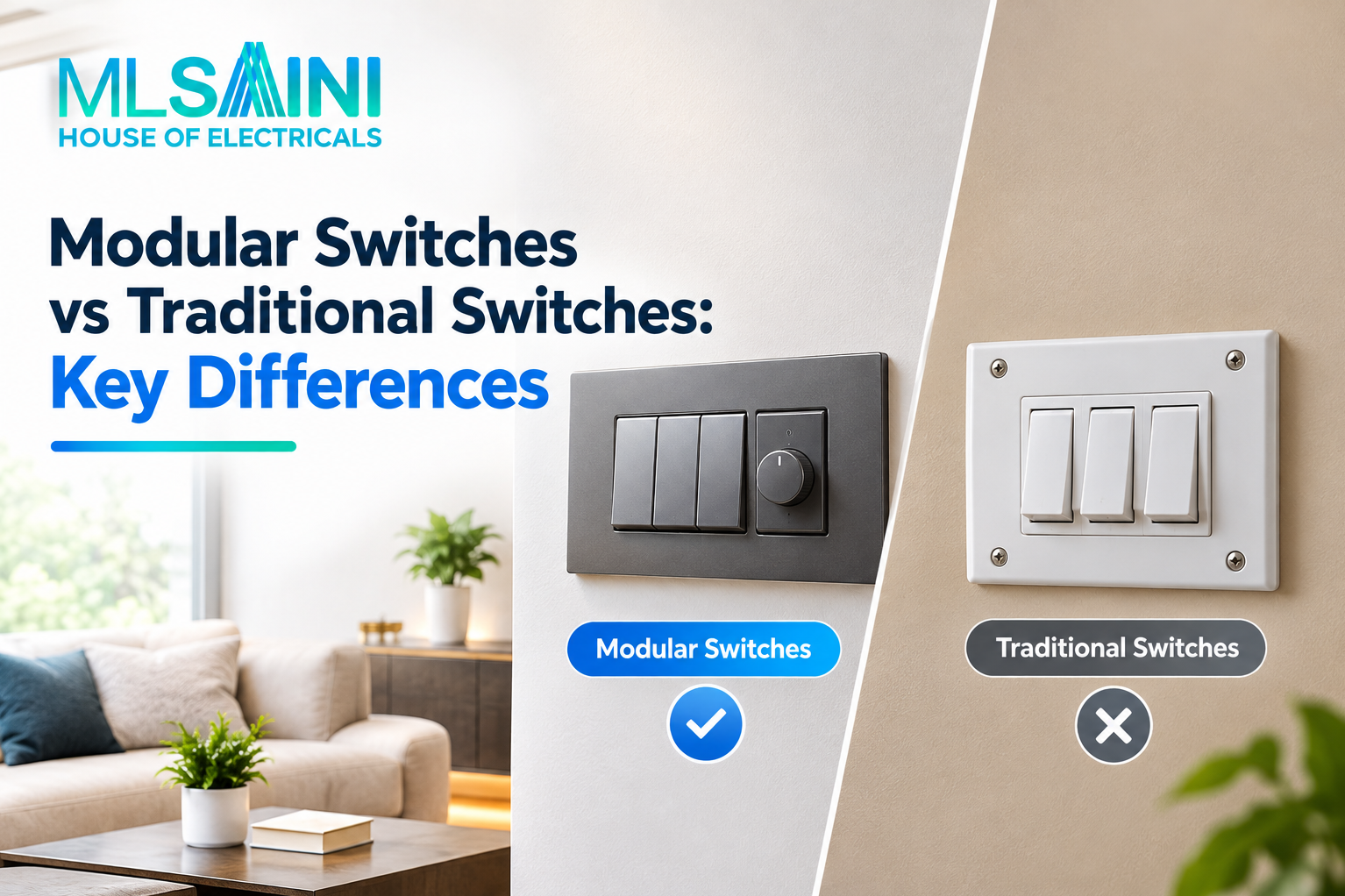
Modular switches generally offer a coordinated appearance with matching plates, finishes, and module arrangements. They are available in different styles and colours, depending on the manufacturer.
Traditional switches often have simpler designs and may suit homeowners who prefer a conventional appearance or want to maintain the look of an existing installation.
Which is better.... Modular switches may be preferable when a coordinated, contemporary finish is important. Traditional switches can remain a practical option where appearance and compatibility are already satisfactory.
Installation and Replacement
Modular switches consist of compatible modules and mounting components. Their installation depends on the switch system, mounting box, wiring arrangement, and manufacturer's instructions.
Traditional switches may use a different mounting arrangement. Replacing them with modular switches can require a compatible box or changes to the mounting plate and wiring arrangement.
Electrical work should be performed by a qualified electrician, with the circuit isolated and verified safe before work begins.
Flexibility and Functionality
Many modular switch ranges allow different compatible modules to be arranged on a mounting plate. This can make it easier to combine lighting controls, sockets, and other functions in one location.
Traditional switch systems may offer fewer combinations within a particular plate design, although available functionality varies between products.
Always confirm that the chosen modules are compatible with the mounting system and the intended electrical application.
Durability and Maintenance
The durability of an electrical switch depends on its materials, construction, electrical rating, installation quality, and usage.
A modular design does not automatically mean that a switch is more durable than a traditional switch. Choose products with appropriate specifications and follow the manufacturer's installation and maintenance instructions.
If a switch becomes loose, overheats, sparks, or shows signs of damage, stop using it and arrange for a qualified electrician to inspect it.
Which Switches Are Better for Different Spaces?
New homes: Modular switches may be a suitable option if you want coordinated finishes and flexibility when planning switch locations and functions.
Home renovations: Either type can work. Consider the existing switch boxes, wiring, budget, and whether you want to update the appearance.
Offices and commercial spaces: Select switches according to expected usage, electrical ratings, installation requirements, and the functions needed in each area.
Rental properties: Practicality, compatibility, replacement cost, and ease of maintenance may be more important than decorative finishes.
Smart homes: Choose products according to the requirements of the automation system rather than assuming that all modular switches support smart control.
Keywords