ML Saini Electric Company is a trusted electrical dealer, supplier, wholesaler and retailer in Delhi, providing quality electrical products and complete solutions under one roof.
With over 39+ years of industry experience, we offer wires, cables, switches, lighting, fans, geysers, electrical accessories, pipes and smart automation solutions for residential, commercial and industrial projects. Our focus is on quality products, reliable service, technical guidance and timely supply.
Indirect vs Direct Hidden Lighting: How the Right Technique Changes Your Interior
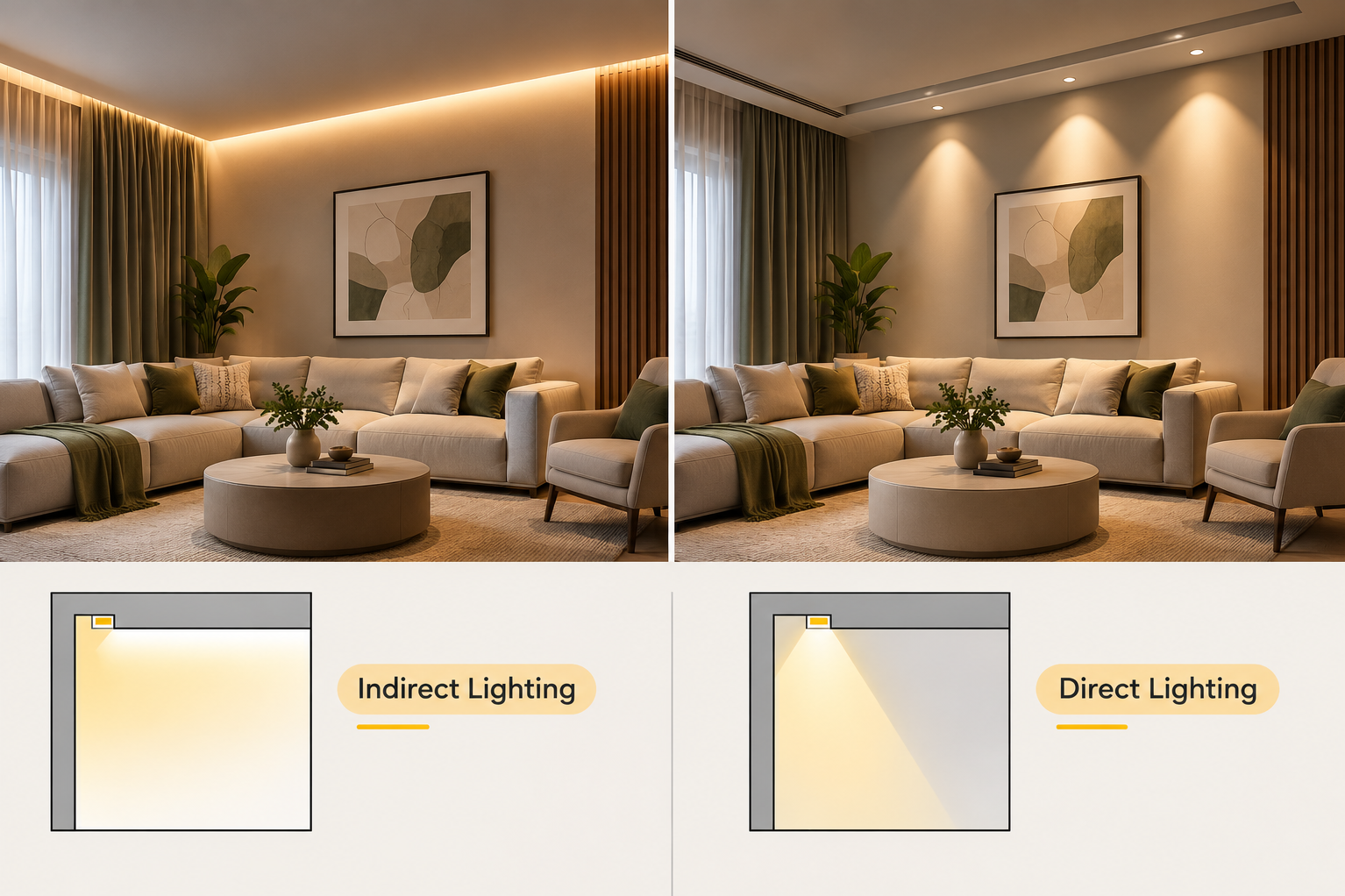
Lighting is not only about making a room brighter—it is about controlling how the space feels, where attention goes, and how architectural details are perceived. Hidden lighting is especially useful in modern interiors because the light source can remain concealed while its effect becomes part of the design.
Two commonly used approaches are Indirect Hidden Lighting and Direct Hidden Lighting. Although both can create a premium, contemporary appearance, the direction of light creates a very different visual effect.
Indirect Hidden Lighting – Soft & Comfortable
With indirect hidden lighting, the LED light source is concealed inside a ceiling cove, recess, or architectural channel. Instead of shining directly into the room, the light is directed toward the ceiling or another surface and then reflected back into the space.
Ideal for: Living rooms, Bedrooms, Lounges, Hospitality spaces, Relaxation areas, Modern residential interiors
The major advantage is visual comfort. Because the light is reflected before reaching the room, it can create a calm atmosphere without making the light source the main visual element.
Direct Hidden Lighting – Focused & Architectural
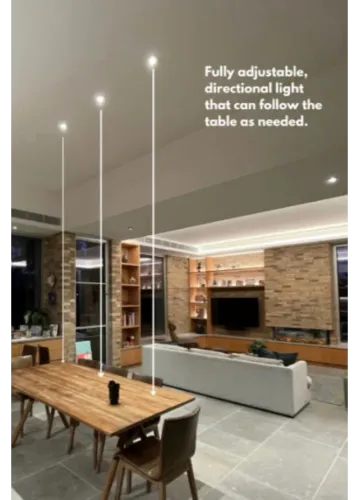
Direct hidden lighting also conceals the fixture, but the light is aimed toward a specific wall or surface. Instead of creating an overall glow, it produces a more defined beam of illumination.
This technique can be used to emphasize :
Textured walls
Artwork
Decorative panels
Feature walls
Architectural elements
Specific zones within a room
The Difference Is in the Direction
The simplest way to understand the two techniques is to look at where the light travels.
Indirect → Light → Ceiling/Surface → Reflection → Room
Direct → Light → Target Surface
This small difference in direction can significantly change the appearance of walls, furniture, textures and architectural details.
If the objective is ambient illumination and visual comfort, indirect hidden lighting can be incorporated into the ceiling or architectural recesses.
If the objective is highlighting a particular surface or design element, direct hidden lighting can be used to create controlled illumination and stronger visual definition.
Professional Lighting Design Matters
A well-designed lighting system combines light direction, beam angle, colour temperature, brightness, surface reflectance and architectural geometry. The goal is not simply to install more lights, but to place the right light in the right location.
For modern homes, luxury interiors, offices and hospitality spaces, hidden lighting can therefore become an important part of the overall architectural design—not just an additional source of illumination.
Upgrade Your Space with the Right Electrical Solutions!
From modern lighting and fans to wires, switches, electrical accessories and smart automation, ML Saini Electric Company offers quality products and reliable solutions for residential, commercial and builder projects.
Keywords